2024 — Present
CurrentGlobal Records
Data & Analytics
Working at Global Records has been one of the most rewarding experiences of my career, giving me the opportunity to combine two areas I genuinely enjoy: technology and creativity. Over time, I developed my own approach to this intersection, something I like to call "Artech", where art meets technology. Being part of such a creative and constantly evolving industry has taught me to grow alongside it, stay adaptable, and continuously look for smarter ways of working. Like any fast-paced business, the music industry comes with its own challenges. It often requires thinking outside the box, finding the fastest and most effective solution to a problem, and constantly optimizing processes and workflows. For me, technology is not just about building tools, it is about making things work better, supporting the business, and ultimately creating more value for both the company and its clients.
What I did
Tools I actually used here
Hover a tool to see what it was actually for.
Behind the scenes
A small, growing scrapbook, space reserved for anonymised screenshots as I add them.
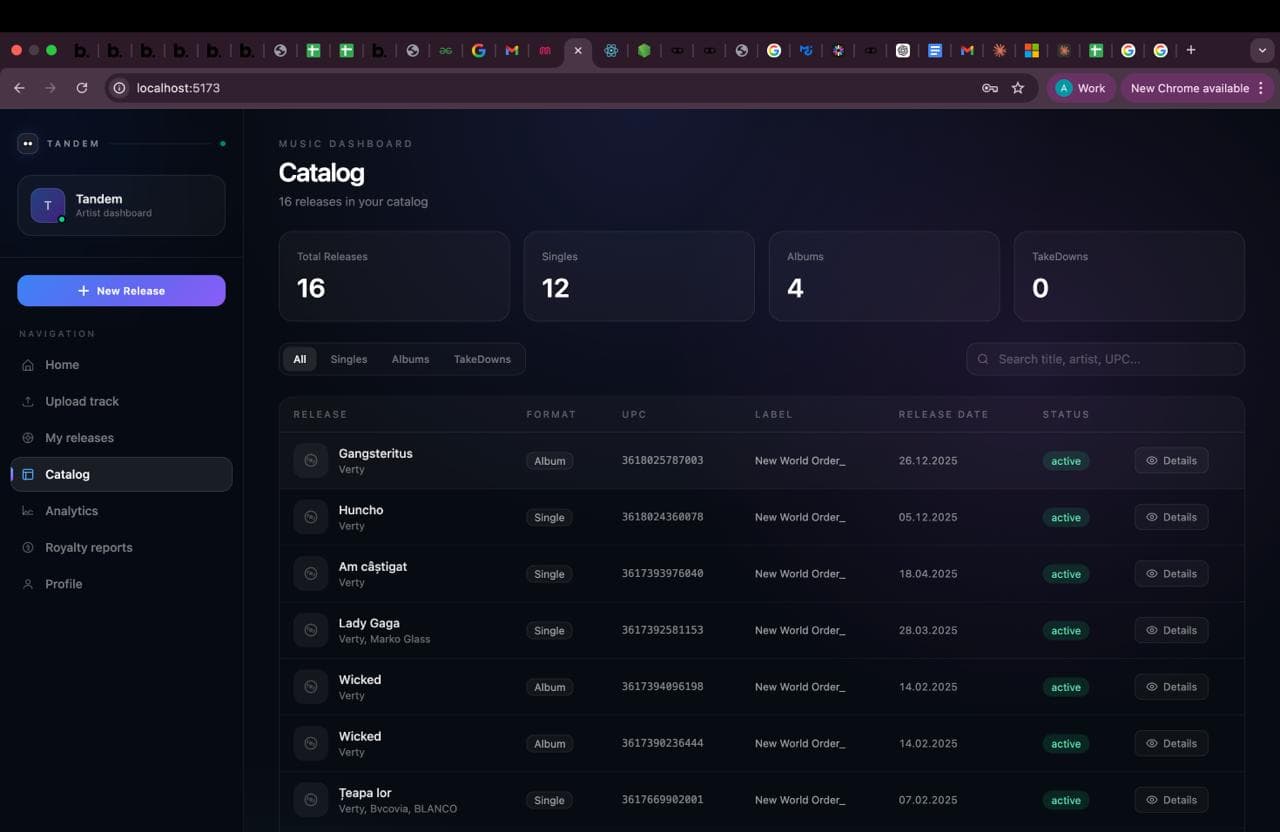
dashboard_v04_final_FINAL.jsx
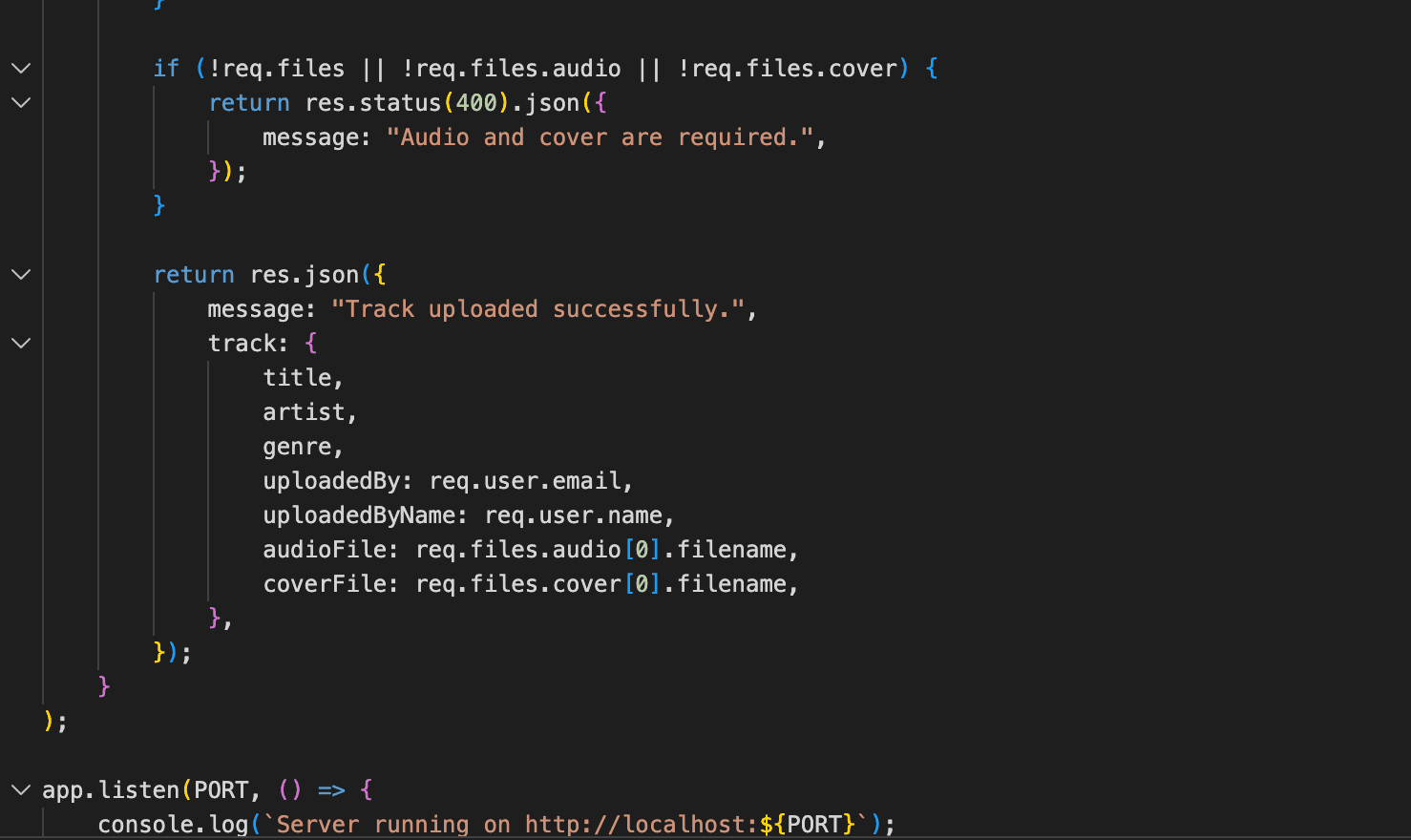
yes, it finally worked.
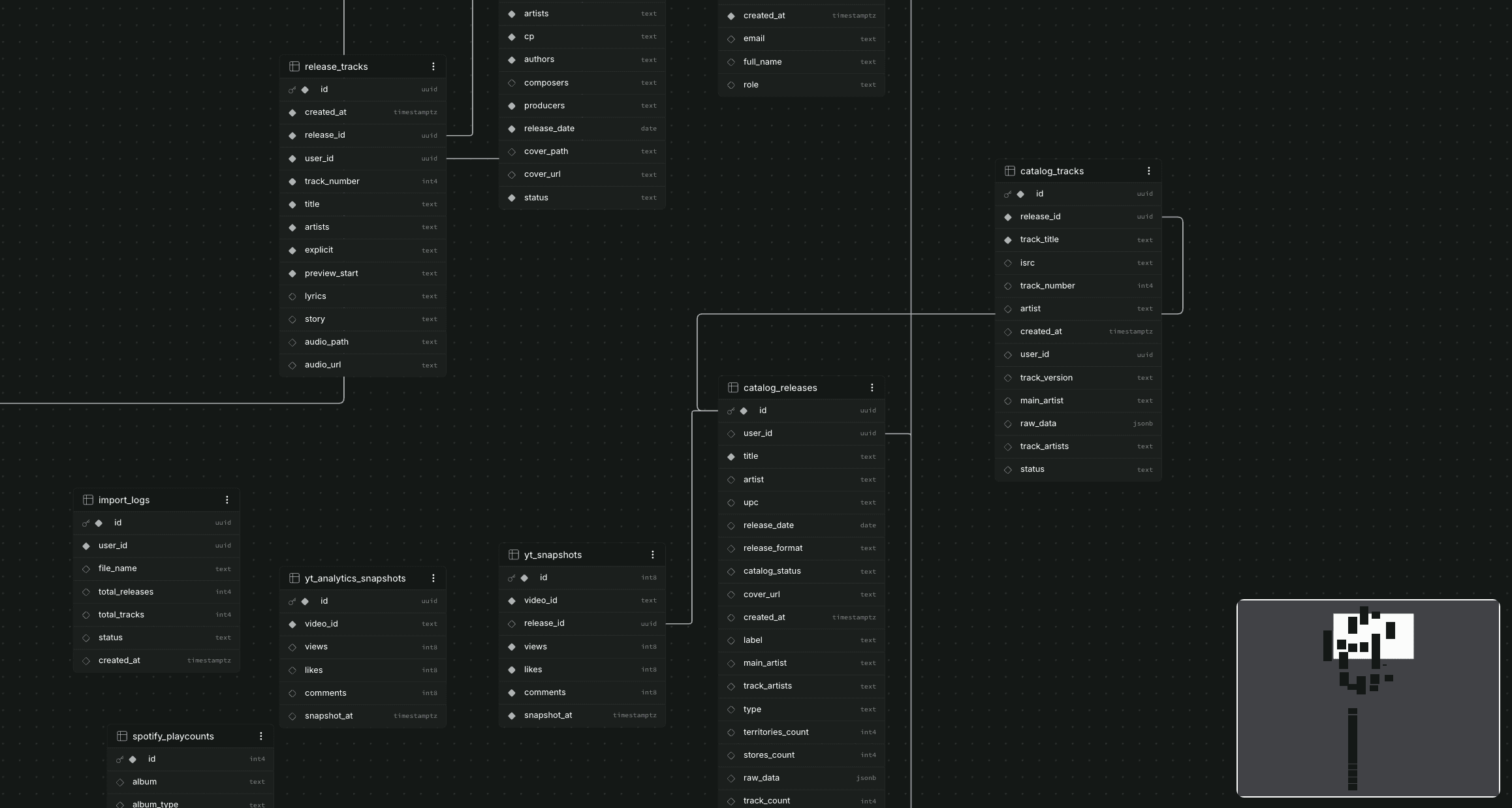
SELECT * FROM my_problems;
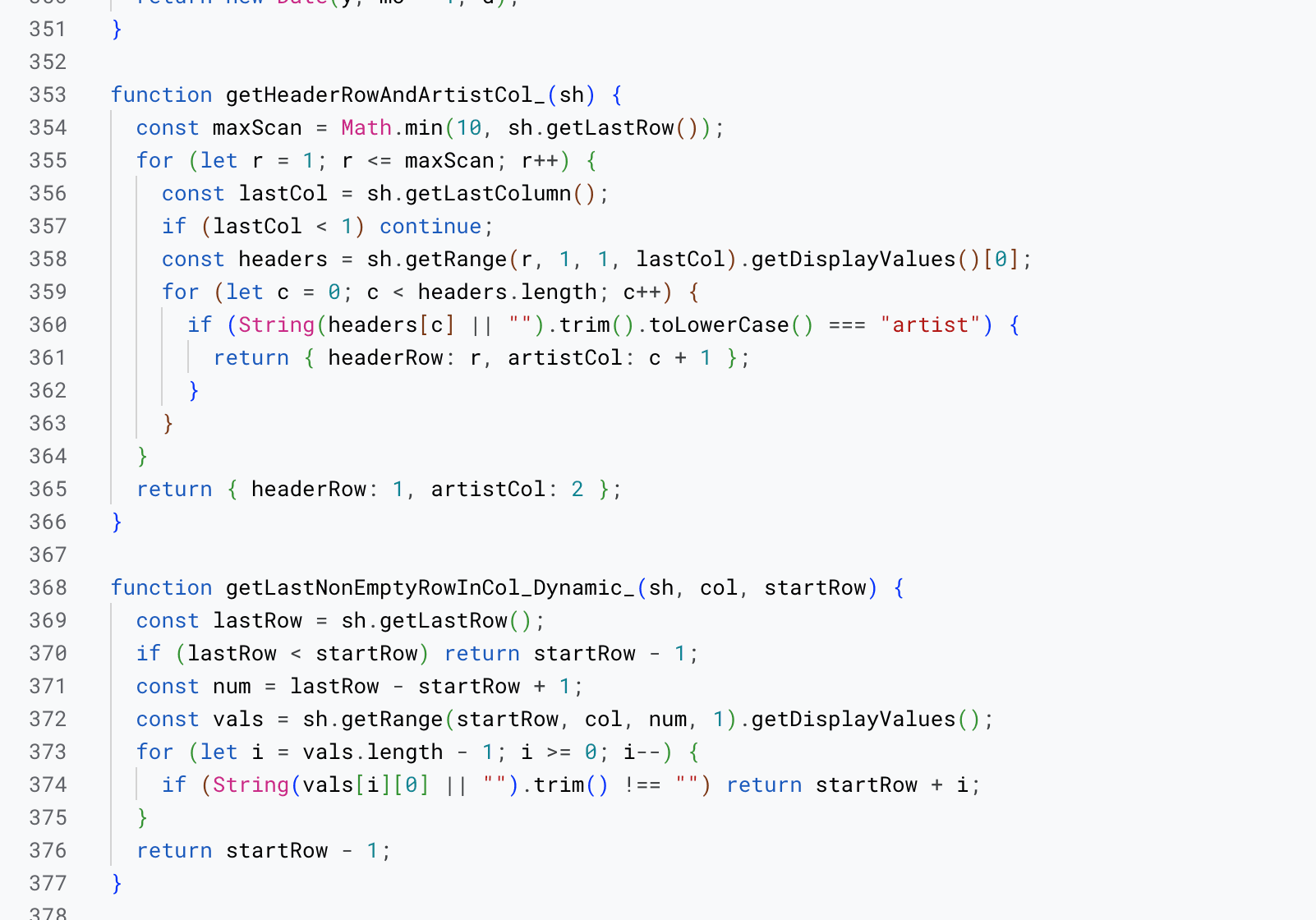
runs while I sleep.
Selected impact
Less about big numbers. More about what genuinely got better.
Automation
recurring reports turned into automated workflows
Data
multiple sources cleaned, standardized and connected
Tools
internal dashboards, APIs and database systems
Business
data translated into useful answers for stakeholders
Things I actually built
Not case studies. Just what got shipped.
Music Catalog Database
Supabase / SQL / APIs
From learning how tables, buckets and Row Level Security work to building my own database and connecting it to the tools I use.
Internal Analytics Dashboard
React / JavaScript / Node.js
Built to make recurring business data easier to explore, understand and use.
Reporting Automation
Python / Google Apps Script / APIs
Turning repetitive reporting processes into automated workflows.
What I learned
Turns out, the hardest problems aren't always technical.
Working here taught me that building the right solution starts before writing any code. Understanding the business problem, the people using the tool, and what actually needs to improve matters just as much as the technology behind it.
good data ≠ useful data
useful data = context + question + action
What I'm taking with me
A better sense of data, and a habit of asking why.
A better understanding of data, stronger technical instincts, and the habit of asking “why are we doing this manually?” a little too often.